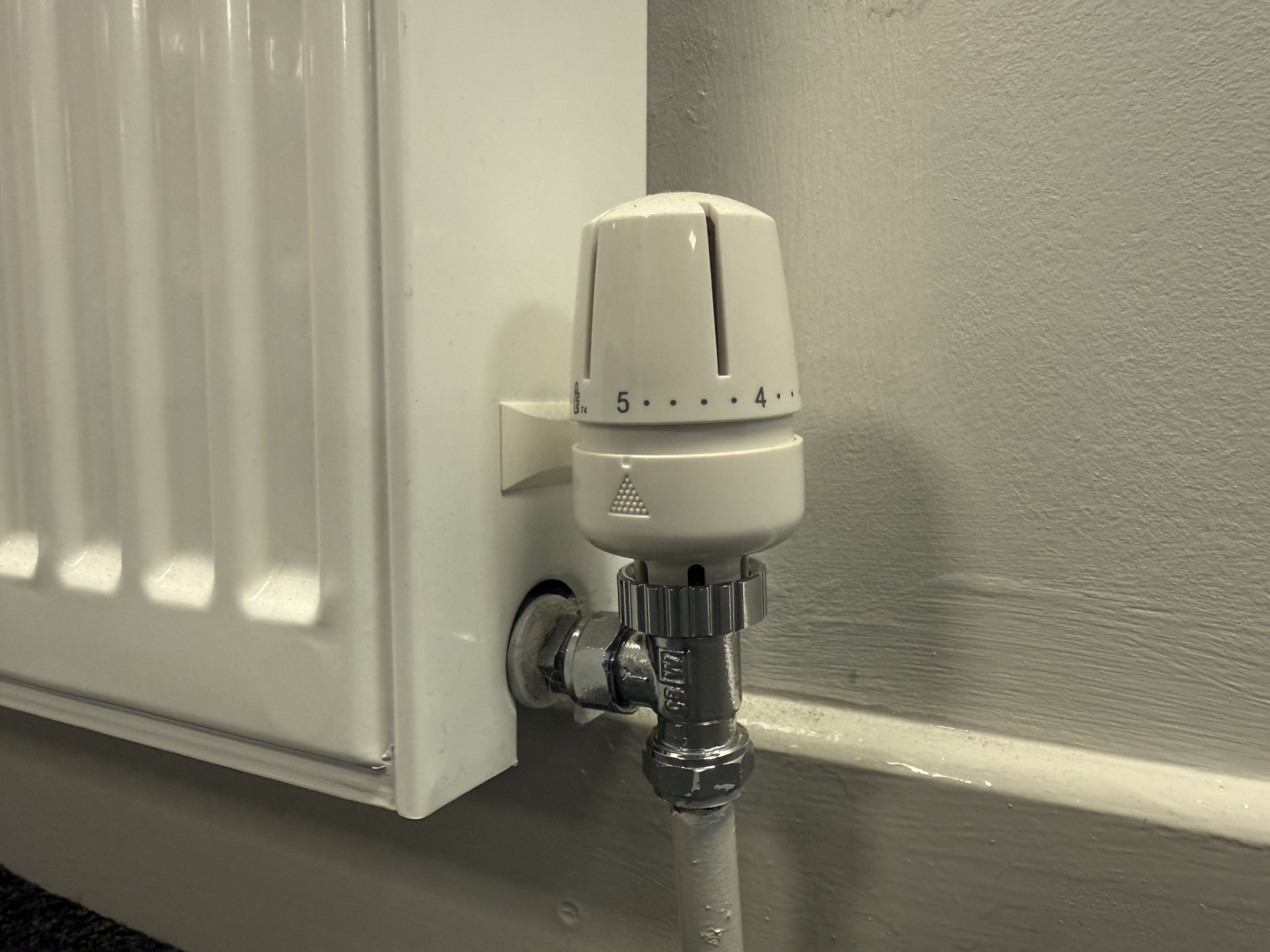
If you understand how your heating controls work, you’ll save energy and money as you’ll be heating your home more efficiently.
Programmers or timers
A timer or programmer allows you to control when your heating and hot water comes on and when it goes off.
Programming your heating
This means you can programme your central heating to fit around your needs. If you’re not at home or you’re in bed asleep, then the heating doesn’t need to be on.
Most programmers are wireless and digital (they have a little screen). Older systems may have a non-digital timer that works by moving ‘tappets’ (little plastic things) around a dial.
The trick is to set your heating to come on half an hour before you get home or get up, and set it to switch off half an hour before you no longer need it. This is because an average home takes around 30 minutes to heat up when the heating comes on and 30 minutes to cool down when it goes off.
Your programmer may also have the option of setting different on/off times at the weekend.
A well-insulated home warms up faster and cools down more slowly – meaning you can set the heating to come on later and turn off sooner, saving energy and money. Play with the timer to see what works best for your home.
Programming your hot water
Setting the hot water timing depends on the type of boiler you have. A combi boiler only heats up water when you turn on a hot tap, so you don’t need to programme it. But if you have a hot water tank, this will need to come on every now and then during the day to make sure you have enough water for activities like washing dishes.
The number of times it does this depends on how big and how well insulated the tank is, and how much water the household uses. Try an hour in the morning and an hour in the evening; if you don’t run out of hot water, then that’s enough – no need to spend more money than you have to!
Room thermostats
Room thermostats are usually found in a hallway or sitting room. Their job is to monitor the temperature in the house and send a signal to the boiler telling it to switch off when the house is warm enough.
Thermostats are normally set between 18 and 21ºC. This is a comfortable temperature for most people. Some people need to keep their home warmer than 21ºC due to their age or health problems.
Some modern heating controls now combine the timer and the thermostat, allowing you to set different temperatures for different times of the day.
Hot water cylinder thermostats
Hot water tank/cylinder thermostats regulate the temperature of your domestic hot water by switching off the heat supply from your boiler once the set temperature has been reached. They can save you money and avoid wasting energy by over-heating your water.
If your hot water tank has its own thermostat, set it to 60°C: that’s hot enough to kill harmful bacteria like legionella, but not so hot that you’re wasting energy. If you find 60°C too hot, mixer taps can help.
Read more about hot water cylinders (including thermostats and cylinder insulation) here.
The following video from the Centre for Sustainable Energy provides guidance on using a central heating programmer
To provide the best experiences, we use technologies like cookies to store and/or access device information. Consenting to these technologies will allow us to process data such as browsing behaviour or unique IDs on this site. Not consenting or withdrawing consent, may adversely affect certain features and functions.
Functional
Always active
The technical storage or access is strictly necessary for the legitimate purpose of enabling the use of a specific service explicitly requested by the subscriber or user, or for the sole purpose of carrying out the transmission of a communication over an electronic communications network.
Preferences
The technical storage or access is necessary for the legitimate purpose of storing preferences that are not requested by the subscriber or user.
Statistics
The technical storage or access that is used exclusively for statistical purposes.The technical storage or access that is used exclusively for anonymous statistical purposes. Without a subpoena, voluntary compliance on the part of your Internet Service Provider, or additional records from a third party, information stored or retrieved for this purpose alone cannot usually be used to identify you.
Marketing
The technical storage or access is required to create user profiles to send advertising, or to track the user on a website or across several websites for similar marketing purposes.